TD Bank Hijacked Nike and Apple Without Getting Sued: The Power of Load-Bearing Creative
Posted: August 22nd, 2026
Key Takeaways
-
Make Borrowed Attention Load-Bearing: Creative stunts only drive real value when the borrowed brand directly demonstrates the core product or offer.
-
Master Strategic Restraint: Showing less of an iconic asset keeps campaigns legally sound while forcing the audience's brain to bridge the gap.
-
Measure Conversions, Not Just Applause: Viral awards and impressions mean nothing if the campaign fails to move the needle on actual account openings.
How do you feature Apple, Nike, and Coca-Cola in your advertisement without paying tens of millions of dollars in licensing fees?
You cut a hole in your billboard.
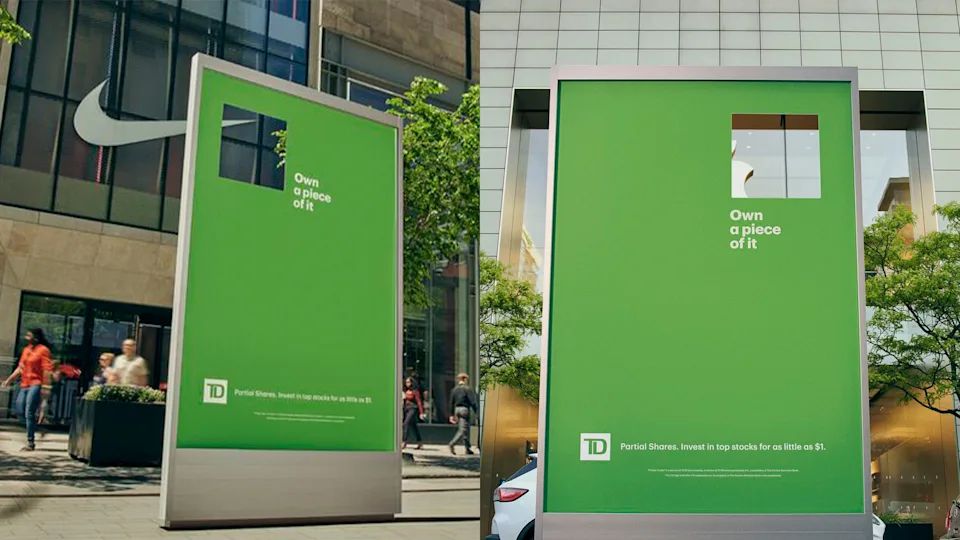
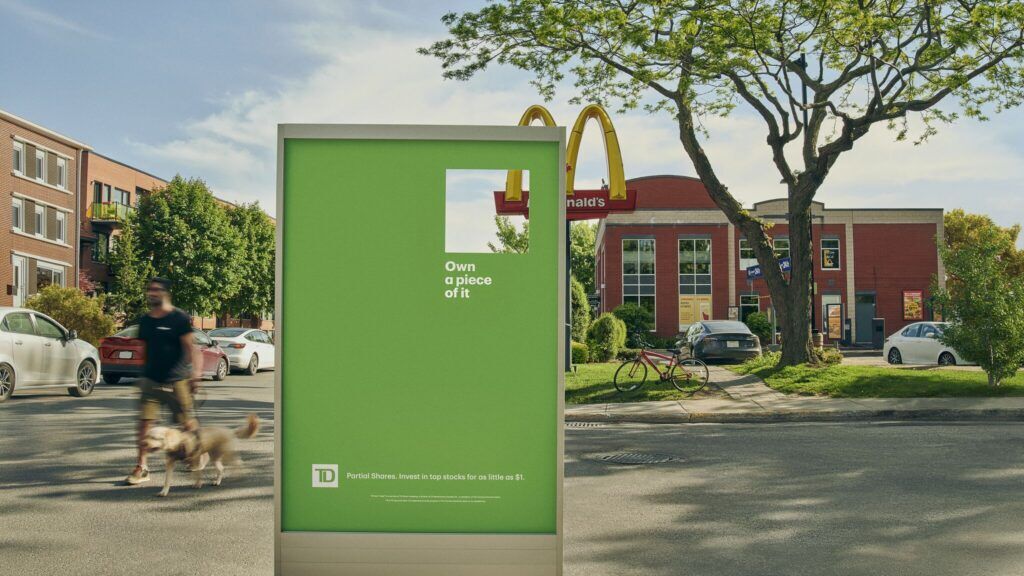
TD Bank and Ogilvy Canada recently executed a masterclass in Out-Of-Home (OOH) guerrilla advertising. To promote their online investing platform's fractional shares feature, they strategically placed signature green TD billboards directly in front of massive, pre-existing billboards owned by global giants.
Instead of printing unlicensed corporate logos and inviting a swarm of cease-and-desist letters, they cut a small window in their poster to reveal just a fraction of the iconic Swoosh or Apple logo behind it.
The accompanying tagline? "Own a piece of it."
It’s bold, legally bulletproof, and executed with extreme restraint. But more importantly, it highlights a crucial lesson for modern brand strategists: Borrowing interest only works when the stunt directly explains the product.
Why Most "Brand Hijacks" Fail (And Why This One Didn't)
Guerrilla marketing and brand hijacking are nothing new. Agencies pull stunts constantly to grab cheap headlines or generate social buzz. However, the vast majority of these campaigns suffer from a major flaw: consumers remember the borrowed brand, not the advertiser.
If a campaign borrows the cultural clout of a major company purely as a decorative gimmick, it wastes budget. TD Bank's execution succeeded because the borrowed interest was load-bearing.
Because TD Bank was promoting fractional stock ownership, showing literally a fraction of a multi-billion-dollar brand’s logo wasn't just a clever joke—it was an exact visual metaphor for the service. You can buy a piece of Apple stock, so showing a piece of their logo bridges the gap between abstract financial service and instant understanding.
Strategic Restraint: The Secret to Legal Safety and Instant Impact
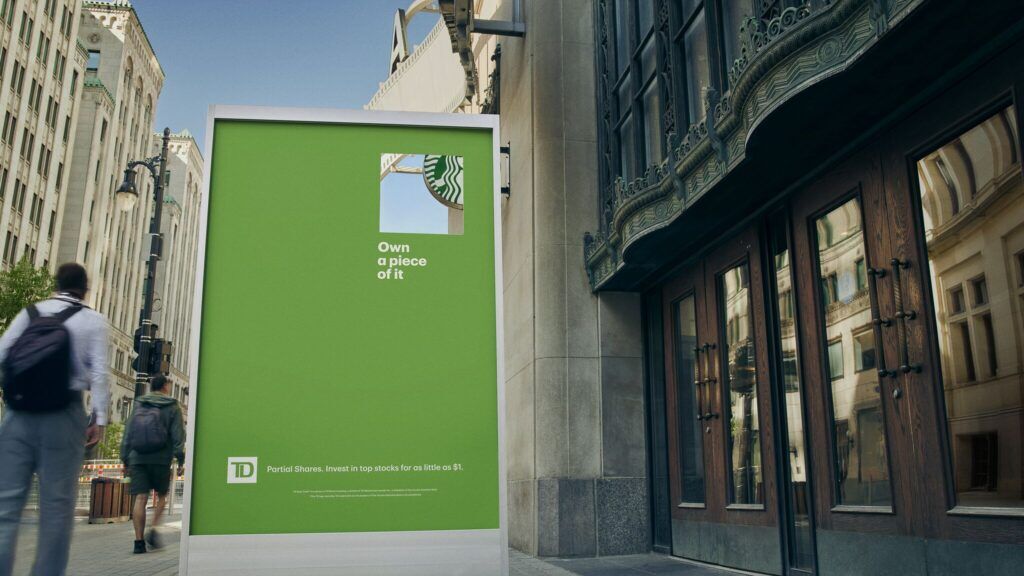
Notice what TD Bank didn't do. They didn't print Apple or Nike logos on their own posters. They didn't over-explain the joke with dense body copy.
They relied on strategic restraint.
When you force the consumer's brain to connect the dots—recognizing a sliver of an Apple logo through a physical cutout and pairing it with "Own a piece of it"—the message lands instantly. By showing less, they protected themselves legally while increasing cognitive engagement.
Applause vs. Account Openings: The Real ROI Test
While marketers love celebrating clever activations, business leaders must ask a harder question: Does a clever billboard actually drive new customer acquisition?
It's easy for creative campaigns to generate industry applause, awards, and viral social shares. However, if brand sentiment shifts toward the featured brands rather than driving actual brokerage account sign-ups, the campaign's return on investment remains incomplete.
Before greenlighting a high-concept marketing campaign, test it against these three rules:
-
Is the connection load-bearing? Does the stunt explain why the product exists, or is it just standing nearby for attention?
-
Is the messaging restrained? Are you trusting your audience to get the punchline, or are you cluttering the visual with unnecessary clutter?
-
How will you track conversion? Are you measuring industry impressions, or are you tracking real downstream business pipeline and user acquisition?
Bottom Line: Creativity Should Serve the Offer
TD Bank's billboard campaign succeeded because simplicity, legal cleverness, and product utility lined up perfectly. They didn't just borrow attention; they used that attention to instantly communicate what fractional investing means.
Great marketing doesn't require multi-million-dollar licensing budgets. It requires clear positioning, strategic restraint, and creative ideas that do the heavy lifting for your product.